
Where Should CCTV Cameras Be Around a Home?
Buying a high-resolution CCTV camera for home is only half the job. If it is positioned badly, the system can still miss the moment you actually need.
Good CCTV design starts with a simple question: what do you want to see?
That might be a person approaching the front door, a vehicle entering the drive, somebody using a side passage, or activity around a garage. Each task can require a different camera position and field of view.
1. Front entrance
The front door is one of the most important areas to cover because it is where visitors, deliveries and unwanted callers commonly approach.
The camera should provide a useful view of the person, not just the top of their head. Mounting a camera excessively high can make it harder to capture identifying detail.
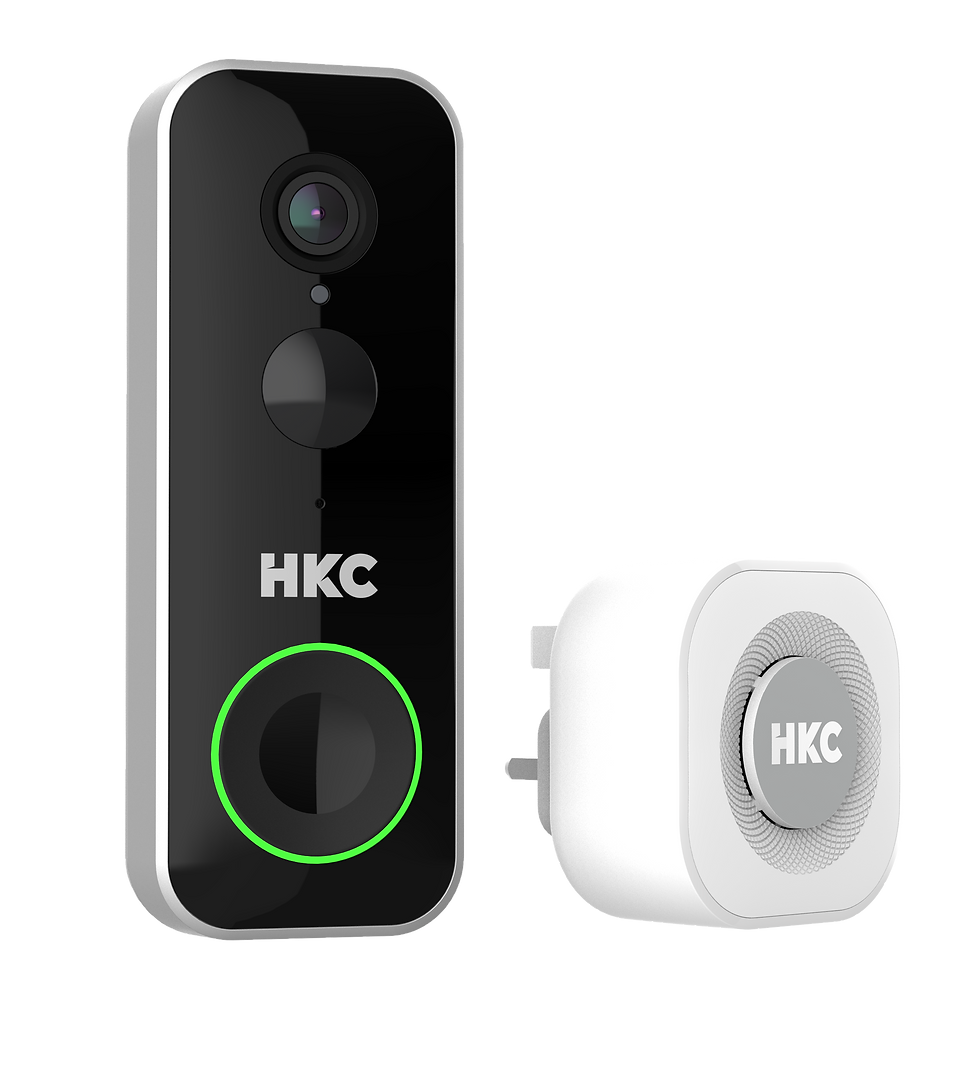
A video doorbell can complement a CCTV camera because it provides a close view at the point of entry, while a fixed CCTV camera may provide a wider overview.
2. Driveway
Driveway cameras are often expected to do several jobs at once: show vehicles, people, the pavement and the front of the house.
Trying to cover too much can reduce useful detail.
Think about what matters most. If vehicle identification is important, the camera angle and distance to the vehicle need consideration. If the priority is seeing people approaching parked cars, a different view may be preferable.
Lighting is also important. Headlights, security lights and strong contrast between bright and dark areas can affect the image.
3. Side access
Narrow side passages are easy to overlook and can be attractive because they often provide a less visible route towards a rear garden.
A dedicated camera covering a side gate or passage can be extremely useful. In narrow areas, positioning should reduce blind spots immediately below or beside the camera.
The camera should also be protected from easy tampering where practical.
4. Rear doors and patio areas
French doors, patio doors and bi-fold doors are common features on modern homes, so rear coverage is often worth considering.
A camera should ideally record someone approaching the access point rather than only capturing the doorway once the person is directly against it.
Where possible, place cameras so that another camera or secure part of the property covers the route someone would take to reach them.
5. Garage and outbuildings
Garages can contain tools, bicycles, vehicles and other valuable items.
If the garage is detached, CCTV design needs to consider power, network connectivity and the physical route between the house and outbuilding.
Sometimes the right solution is a camera mounted on the main house looking towards the garage. In other situations, mounting on the garage itself provides better identification.
How high should CCTV cameras be mounted?
There is no universal height that suits every property.
A camera mounted too low can be easier to interfere with. A camera mounted too high can produce an excellent view of the top of a person's head but poor facial detail.
Professional CCTV design balances security, field of view, service access and the detail required from the image.
The correct position may also vary between a wide driveway camera and a narrow side-access camera.
Think about night-time performance
A position that looks excellent at midday might be poor after dark.
Infrared reflection from walls, soffits or nearby objects can affect night images. Security lights, streetlights and vehicle headlights can also change the scene.
When commissioning a system, it is useful to review both daytime and night-time images rather than judging placement only during installation.
Avoid pointing every camera at the widest possible area
A wide view looks impressive on a monitor, but it can reduce the number of pixels covering the person or object you actually need to identify.
In simple terms, a camera can either cover a very large area or concentrate more detail on a smaller area. Good CCTV design decides what each camera is responsible for.
Rather than one camera trying to see the whole property, several carefully positioned cameras can create more useful coverage.
Consider privacy
Domestic CCTV should be positioned to minimise unnecessary recording beyond your own property where possible.
If your system captures people outside your property boundary, such as on a public area or neighbouring property, data protection responsibilities can apply. Privacy masking and careful camera angles can help reduce unnecessary coverage.
We have a separate guide covering home CCTV and UK privacy rules in more detail.
CCTV installation in Rugby, Leicester, Lutterworth and Northampton
Midland Alarm Services East installs CCTV systems for homes and businesses across Rugby and the surrounding Midlands.
Our approach is to decide what you need each camera to achieve before choosing its final position. That gives you a system designed around useful evidence rather than simply a row of cameras fixed to the highest point on the building.
Frequently asked questions
How many CCTV cameras does a typical home need?
It depends on the layout and the areas you want to cover. A small property may only need a few carefully positioned cameras, while a detached home with several access routes may require more.
Should CCTV cameras point at doors or towards people approaching them?
Where possible, it is usually helpful to capture the approach as well as the access point, because this gives more opportunity to record useful detail.
Can a CCTV camera see in total darkness?
Many cameras use infrared or other low-light technology, but performance depends on the camera and the scene.
Should CCTV cover the pavement?
Only capture what is reasonably necessary. If you record outside your property boundary, additional data-protection responsibilities can apply.
Want advice on camera placement?
Contact Midland Alarm Services East on 01788 708 035 to discuss a CCTV survey for your home or business.
Comments