
4MP vs 8MP/4K CCTV Cameras: Do You Really Need 4K?
When people compare CCTV quotations, megapixels are one of the easiest numbers to focus on.
If one camera is 4MP and another is 8MP, it is tempting to assume the 8MP camera must automatically be twice as good. In practice, CCTV image quality depends on much more than resolution.
A correctly positioned 4MP camera can provide more useful evidence than a poorly positioned 8MP camera covering too much area.
What does MP mean?
MP means megapixels.
A higher megapixel count generally means the camera can record more image detail, assuming the lens, sensor, lighting, compression and other parts of the system are capable of making good use of that resolution.
8MP is commonly associated with 4K-class video.
Is 8MP better than 4MP for ?
For fine detail in suitable conditions, 8MP can have an advantage.
That can be valuable where you want to retain more detail across a scene or digitally zoom into recorded footage.
However, the improvement you see in the real world depends on how many pixels actually cover the person, vehicle or object you are interested in.
If an 8MP camera is mounted very high and looks over a huge driveway, the face you want to identify may still occupy only a small part of the picture.
Camera positioning comes first
Before choosing resolution, decide what the camera must achieve. We cover this in more detail in our guide on where to position CCTV cameras.
A camera at the front door may need good facial detail. A camera looking across the rear garden may be intended to show movement and direction of travel. A driveway camera might need a useful view of people near vehicles.
Those are different tasks.
Good CCTV design assigns a job to each camera and positions it accordingly.
Storage requirements
Higher-resolution footage can require more storage, depending on compression, frame rate, scene activity, recording mode and bitrate settings.
If you want continuous recording from several high-resolution cameras and you want to retain footage for a long period, the NVR hard-drive capacity needs to be sized accordingly.
Simply choosing the highest resolution without considering storage can result in less recorded history than expected.
Bandwidth and network considerations
IP CCTV cameras transmit data over a network.
Higher-resolution streams can use more bandwidth, although modern video compression can reduce the amount considerably.
For a properly designed small residential system, this is normally manageable, but network quality still matters. Cabling, PoE switching, recorder capacity and remote-view settings all form part of the system.
What about night-time image quality?
Megapixels do not tell you how good the camera will be at night.
Sensor quality, lens aperture, infrared illumination, available ambient light and camera processing can all affect low-light performance.
A lower-resolution camera with a strong sensor and sensible placement can sometimes provide a more useful night image than a higher-resolution camera chosen purely for its specification sheet.
This is why we recommend looking at the whole camera rather than one headline number.
Do you need 4K CCTV at home?
Sometimes.
4K can be particularly useful where the camera needs to cover a larger scene while retaining detail, or where high-resolution evidence is important.
But it is not essential for every camera on every property.
For a narrow side passage, for example, a well-positioned 4MP camera may comfortably provide the detail required. Spending more on resolution may offer little practical benefit.
What matters more than megapixels?
Several factors matter alongside resolution:
Camera position and angle.
Distance to the target area.
Lens and field of view.
Day and night lighting.
Sensor quality.
Recording settings.
Storage capacity.
Reliable network and power.
The ability to retrieve footage easily when needed.
A balanced CCTV system considers all of them.
How we choose cameras
At Midland Alarm Services East, we start with the property rather than the box.
We look at the driveway, entrances, side access, rear garden, garage and any specific concern the customer has. We then decide the coverage and level of detail required.
That makes the specification easier to justify. If 8MP provides a genuine advantage, there is a reason for it. If 4MP is more than adequate for a particular camera position, there is no value in selling resolution purely for the sake of a bigger number.
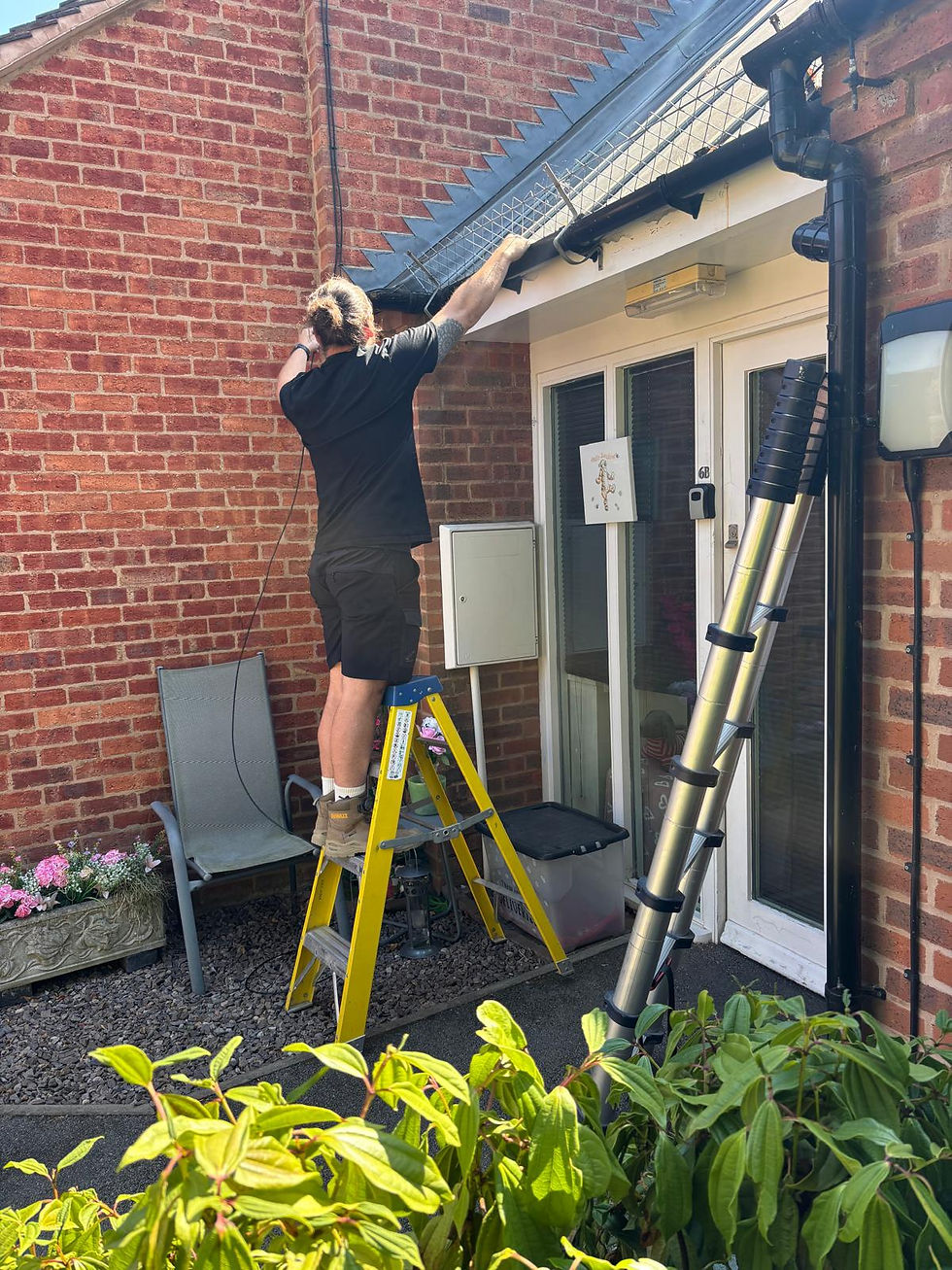
CCTV installation across Rugby and surrounding areas
We install CCTV systems for homeowners and businesses across Rugby, Leicester, Lutterworth, Northampton and surrounding areas.
If you are comparing CCTV quotations, ask the installer to explain what each camera is expected to see and why that camera has been selected. That answer is often more useful than the megapixel number alone.
Frequently asked questions
Is 8MP the same as 4K CCTV?
8MP cameras are commonly marketed as 4K-class cameras because their resolution is around the 4K UHD range, although exact specifications vary.
How much storage does 4K CCTV need?
It depends on the number of cameras, bitrate, compression, frame rate, recording schedule and desired retention period.
Is 4MP good enough for a house?
It can be excellent when the camera is appropriate for the scene and correctly positioned.
Can I view 4K CCTV on my phone?
Compatible systems can stream to mobile devices, although remote viewing may use a lower-resolution sub-stream to reduce data use.
Need help choosing CCTV?
Contact Midland Alarm Services East on 01788 708 035 to arrange a CCTV survey.

Comments